As electric vehicles (EVs) continue to gain popularity worldwide, many drivers are looking for cleaner and more affordable ways to charge them. One solution that has captured global attention is EV charging with solar panels.
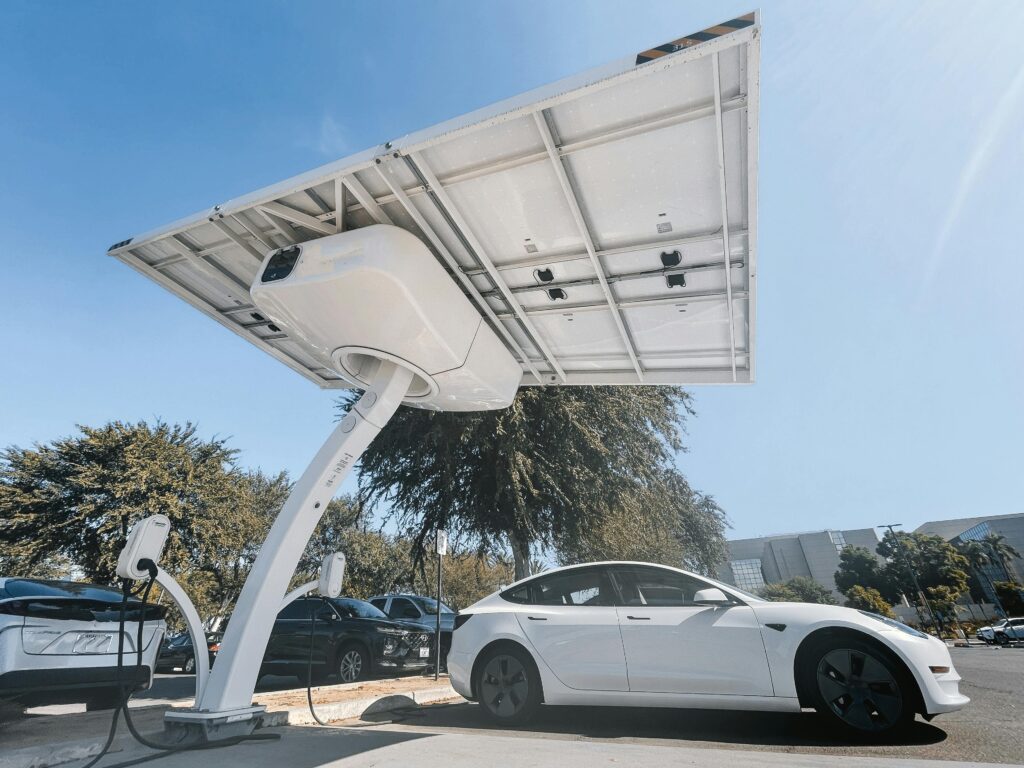
Imagine powering your car directly from sunlight while reducing your electricity bills and carbon footprint. It sounds like the perfect combination of sustainable transportation and renewable energy. But is it really possible?
The answer is yes. EVs can be charged using solar panels, and thousands of homeowners and businesses across the world are already doing it. From the United States and Europe to India and Australia, solar-powered EV charging is becoming an increasingly practical and cost-effective option.
In this guide, we’ll explain how EV charging with solar panels works, the equipment required, costs, benefits, challenges, and whether it makes sense for your home or business.
Table of Contents
What Is EV Charging With Solar Panels?
EV charging with solar panels refers to using electricity generated by a solar photovoltaic (PV) system to charge an electric vehicle.
Solar panels installed on rooftops or ground-mounted systems convert sunlight into electricity. This electricity can then be used to:
- Power household appliances
- Store energy in batteries
- Feed excess power back to the grid
- Charge an electric vehicle
Instead of relying entirely on electricity from the utility grid, EV owners can generate their own clean energy and use it to fuel daily driving needs.
This combination creates a highly sustainable transportation solution that reduces both energy costs and environmental impact.
How Does EV Charging With Solar Panels Work?
The process is relatively straightforward
Step 1: Solar Panels Generate Electricity
Sunlight is captured by solar panels and transformed into direct current (DC) electricity.
Step 2: Inverter Converts Power
Most homes and EV chargers use alternating current (AC) electricity. A solar inverter converts DC power from the solar panels into usable AC electricity.
Step 3: EV Charger Supplies Power
The electricity flows through a dedicated EV charger, which safely delivers power to the vehicle battery.
Step 4: Excess Energy Is Stored or Exported
If your home uses less electricity than your solar system generates, the extra energy can:
- Be stored in a home battery system
- Be exported to the grid through net metering programs
This enables homeowners to get the most out of their solar investment.
Can You Charge an EV Directly From Solar Panels?
Technically, yes. However, most systems use an inverter and charging equipment to regulate power delivery.
There are three common solar EV charging setups:
Grid-Tied Solar System
The most popular option worldwide.
- Solar panels generate electricity during the day.
- The electric grid receives extra energy.
- The EV can charge using solar energy when available and grid electricity when needed.
Solar + Battery Storage
A more advanced setup.
- Solar panels charge a home battery.
- The battery stores excess solar energy.
- EVs can be charged day or night using stored solar power.
Off-Grid Solar Charging
Less common but possible.
- Completely independent from the utility grid.
- Requires a large solar array and battery storage system.
- Often used in remote locations.
What Equipment Is Required?
To implement EV charging with solar panels, you’ll need several key components.
Solar Panels
Solar panels are the foundation of the system.
Modern residential solar panels typically produce between 350W and 550W per panel.
Solar Inverter
The inverter transforms DC electricity produced by the sun into AC electricity that your house and EV charger can use.
EV Charging Station
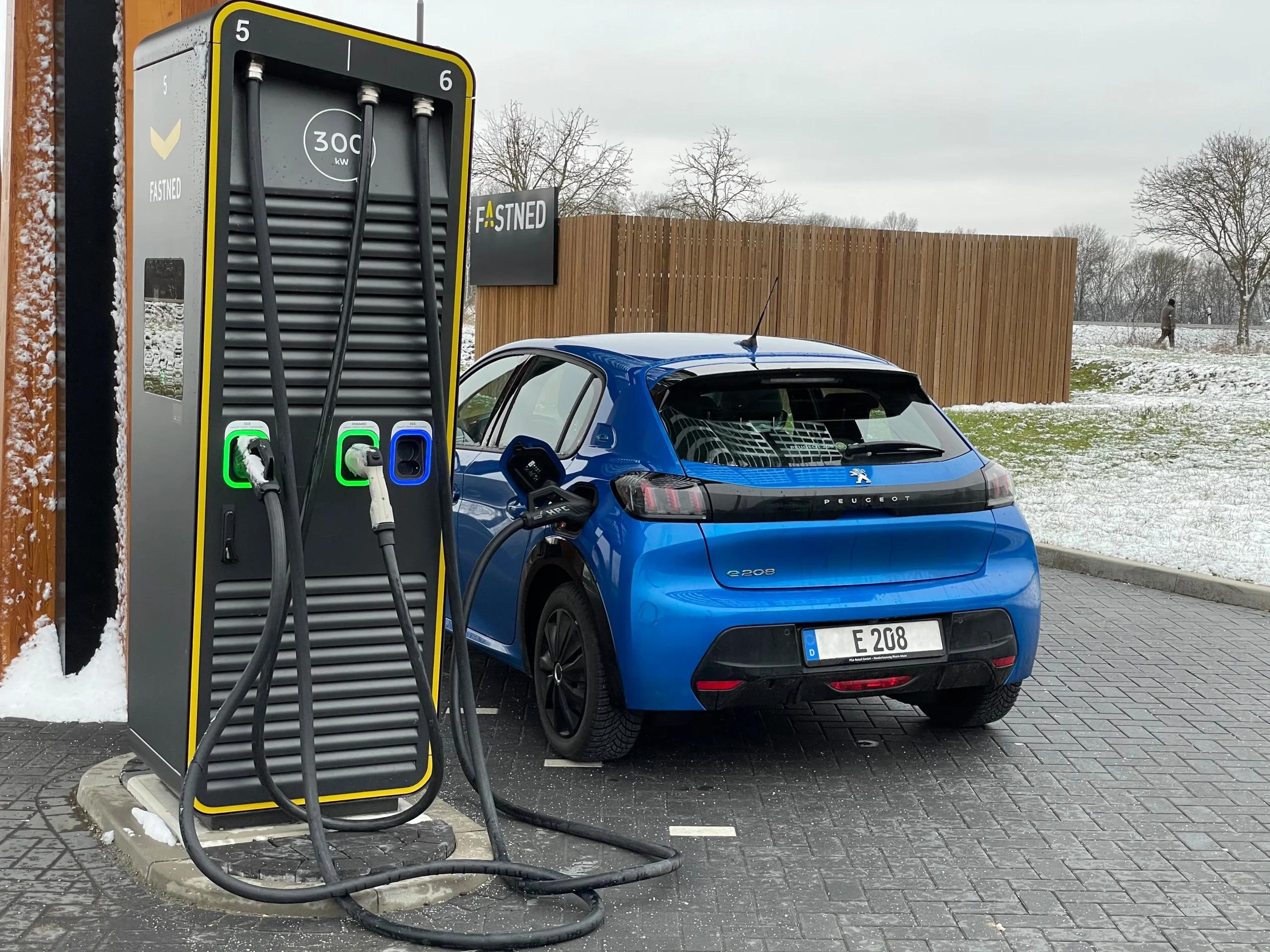
Most homeowners use a Level 2 charger because it offers faster charging speeds than a standard wall outlet.
Battery Storage (Optional)

Battery systems store excess solar energy for use after sunset or during power outages.
Popular options globally include Tesla Powerwall, Enphase IQ Battery, and LG Energy Solution products.
How Many Solar Panels Are Needed to Charge an EV?
The answer depends on several factors:
- Vehicle efficiency
- Daily driving distance
- Local solar radiation levels
- Panel efficiency
Example Calculation
Suppose your EV consumes:
15 kWh per 100 km
And you drive:
50 km per day
Daily energy requirement:
7.5 kWh
A modern 400W solar panel can generate roughly 1.5–2.0 kWh per day depending on location.
Therefore:
7.5 kWh ÷ 1.8 kWh
≈ 4 to 5 solar panels
However, most households install larger solar systems because they also want to offset home electricity usage.
Benefits of EV Charging With Solar Panels
Lower Charging Costs
One of the biggest advantages is reducing dependence on purchased electricity.
Once the solar system is installed, sunlight is essentially free.
Over the lifetime of the system, charging costs can be significantly lower than grid-based charging.
Reduced Carbon Emissions
Electric vehicles already produce fewer emissions than gasoline or diesel vehicles.
When powered by solar energy, emissions can be reduced even further.
Greater Energy Independence
Solar-powered EV charging reduces exposure to:
- Rising electricity prices
- Fuel price volatility
- Utility outages
Long-Term Financial Savings
Although installation requires upfront investment, solar systems often pay for themselves through electricity savings over time.
Increased Property Value
Homes with solar installations are increasingly attractive to environmentally conscious buyers.
Challenges of EV Charging With Solar Panels
Initial Installation Cost
The biggest obstacle is the upfront cost of:
- Solar panels
- Inverters
- EV chargers
- Battery storage systems
However, falling solar prices and government incentives continue to improve affordability.
Weather Dependence
Solar production varies based on:
- Cloud cover
- Rainfall
- Seasonal sunlight
Regions with high solar irradiance generally achieve better returns.
Limited Roof Space
Some homes may not have sufficient roof area for a solar array large enough to support both household electricity consumption and EV charging.
Battery Costs
Battery storage improves flexibility but can substantially increase project costs.
EV Charging With Solar Panels in India
India presents a particularly attractive market for solar-powered EV charging.
Why Solar EV Charging Makes Sense in India
- High solar potential across most regions
- Rising fuel prices
- Growing EV adoption
- Government support for rooftop solar installations
Many Indian states receive over 250 sunny days per year, making solar energy highly productive.
Estimated Costs in India
| Component | Approximate Cost |
| 3 kW Solar System | ₹1.8–2.5 lakh |
| 5 kW Solar System | ₹3–4 lakh |
| Home EV Charger | ₹20,000–₹80,000 |
| Battery Storage | ₹1–5 lakh |
Government subsidies under rooftop solar programs can help reduce installation costs.
Global Adoption of Solar-Powered EV Charging
Countries leading the transition include:
- United States
- Germany
- Netherlands
- Australia
- China
- India
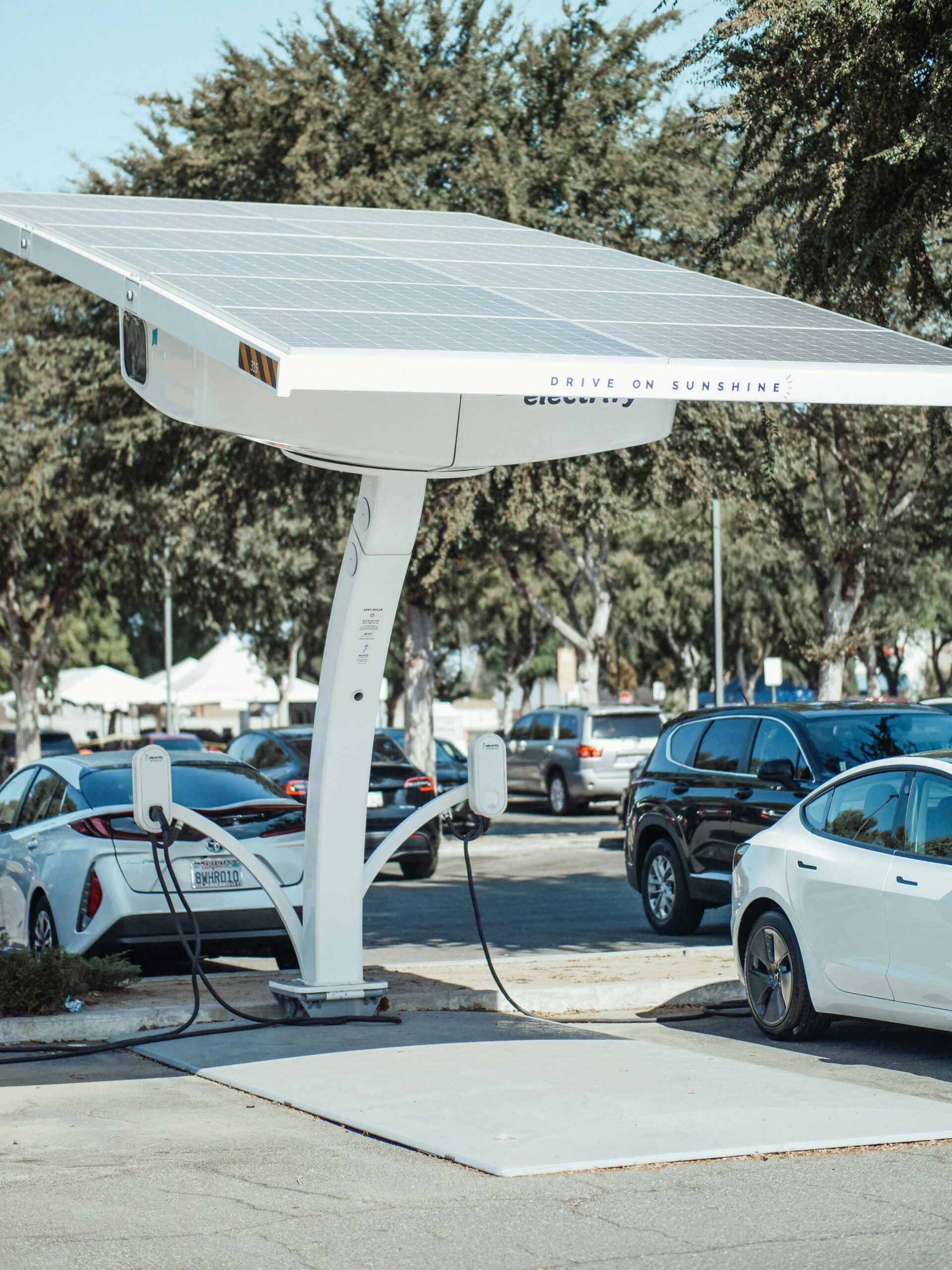
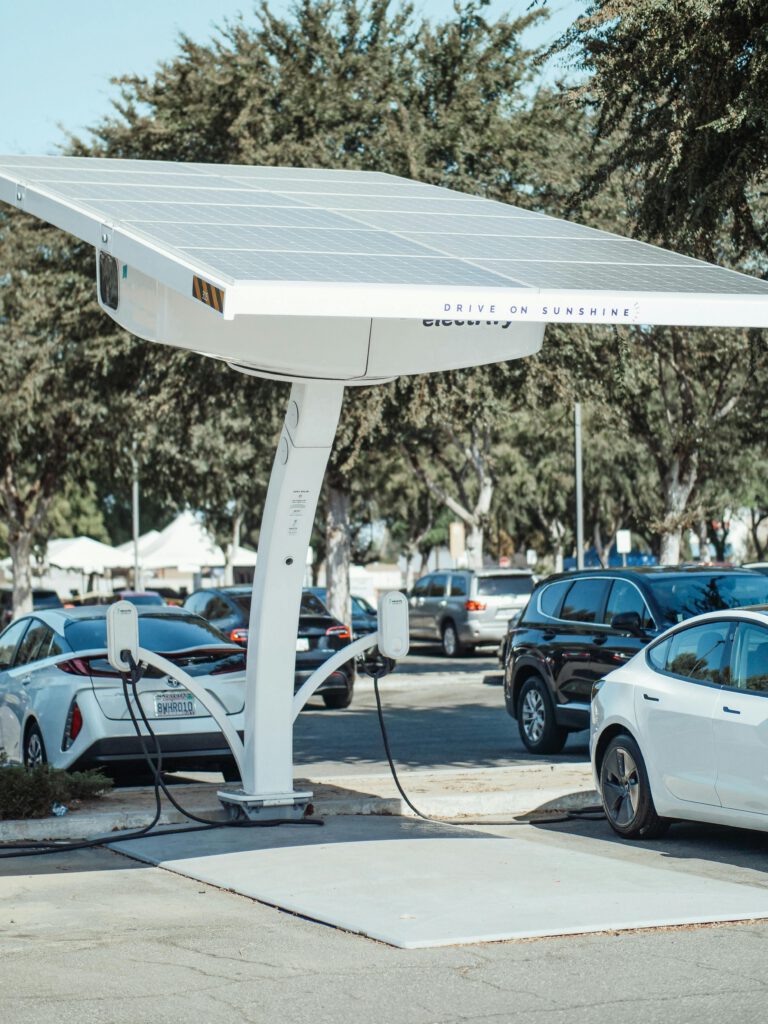
Many businesses are also installing solar-powered charging stations at workplaces, shopping centers, and public parking facilities.
Solar carports are becoming increasingly common, providing both shade and clean energy generation.
Is EV Charging With Solar Panels Worth It?
For most homeowners, the answer is yes.
The combination of renewable energy and electric mobility offers:
- Lower operating costs
- Environmental benefits
- Long-term savings
- Greater energy security
While the initial investment may seem substantial, many users recover costs through reduced electricity expenses over several years.
For households with high electricity consumption and regular EV usage, the financial benefits can be especially compelling.
The Future of EV Charging With Solar Panels
The future looks promising.
Emerging technologies include:
- Smart charging systems
- Vehicle-to-home (V2H) technology
- Vehicle-to-grid (V2G) integration
- AI-based energy management
- Solar-powered charging hubs
As battery technology improves and solar costs continue to decline, EV charging with solar panels is expected to become a mainstream energy solution worldwide.
Conclusion
So, can EVs be charged with solar panels?
Absolutely.
EV charging with solar panels is one of the most efficient and environmentally friendly ways to power an electric vehicle. Whether you’re a homeowner in India, the United States, Europe, or anywhere else in the world, combining solar energy with electric transportation can reduce costs, lower emissions, and provide greater energy independence.
As renewable energy adoption accelerates globally, solar-powered EV charging is likely to play a key role in the future of sustainable mobility.
FAQS
Can EVs be charged with solar panels?
Yes, Solar-generated electricity can be used to charge electric vehicles with an EV charging station and solar inverter.
What is the number of solar panels required to charge an EV?
Most EV owners require between 4 and 10 solar panels depending on daily driving distance, vehicle efficiency, and local sunlight conditions.
Does charging an EV using solar power require a battery?
No. Battery storage is optional. EVs can be charged directly from a grid-connected solar system during daylight hours.
Is grid charging more expensive than solar-powered EV charging?
Yes, most of the time. When compared to using only grid electricity, solar-generated electricity can drastically lower long-term EV charging costs.
What is the price of a solar-powered EV charging system in India?
A typical residential solar EV charging setup in India may cost between ₹2 lakh and ₹5 lakh depending on solar system size, charger type, and battery storage requirements.
Is solar-powered EV charging worth it?
Yes. Solar-powered EV charging offers lower energy costs, reduced emissions, long-term savings, and greater energy independence, making it a worthwhile investment for many EV owners.