Semiconductors in electric vehicles are tiny chips designed to control current, voltage, and data transfer. They are used in:
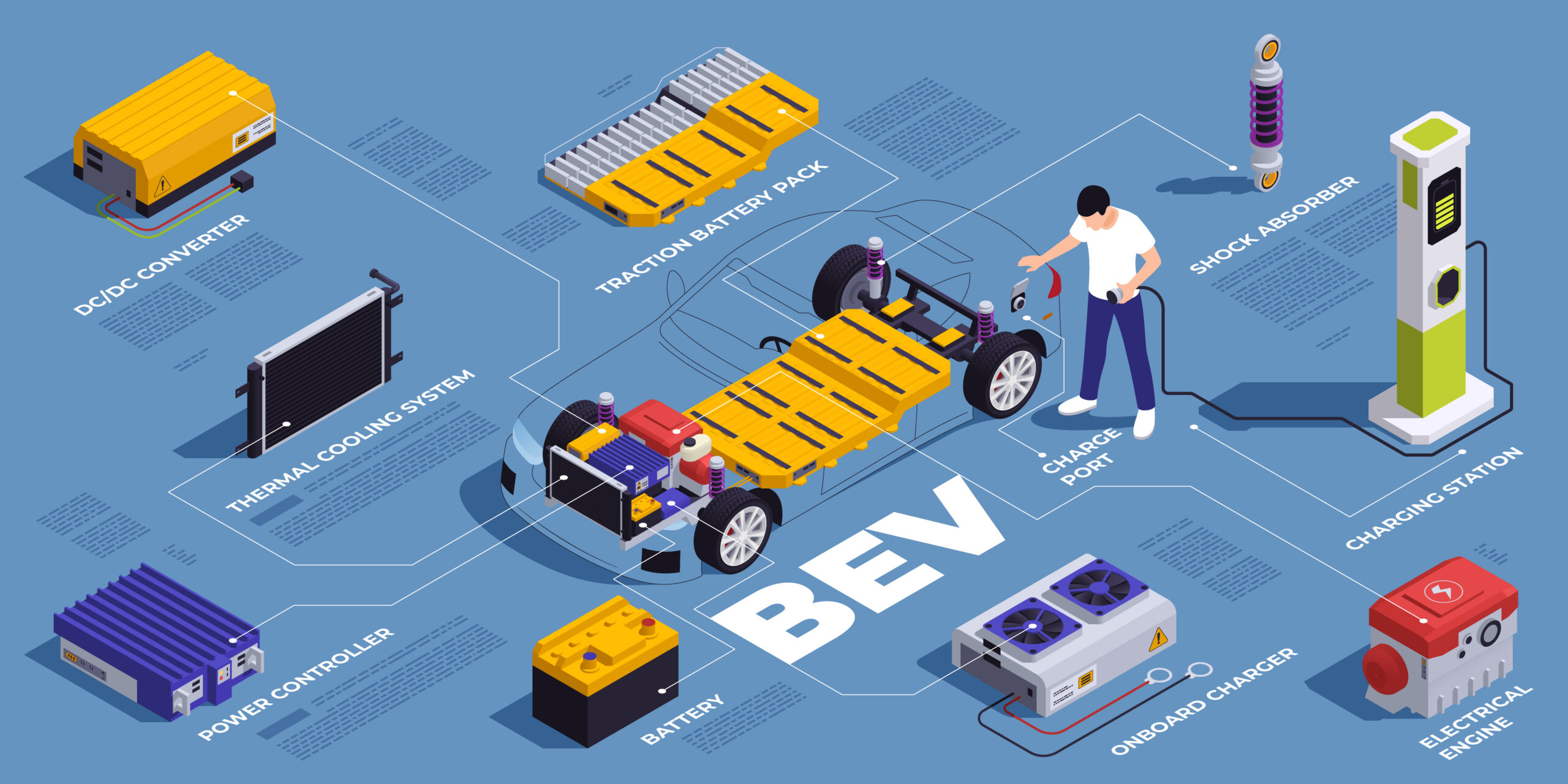
Battery Management Systems (BMS) – monitoring charge/discharge cycles
Inverters – converting DC to AC for motors
Onboard Chargers – enabling fast charging compatibility
Safety Systems – ABS, airbags, and ADAS in modern EVs
Why Semiconductors Matter in EVs
Electric Vehicles (EVs) are not just powered by batteries but also by semiconductors, often called the brains of EV technology. EV semiconductors control power flow, improve battery efficiency, and ensure safety in charging and driving. With the rise of EV adoption in India and globally, the demand for automotive semiconductors has skyrocketed.