
Learn all about electric car charging station requirements in India and global markets – space, cost, charger types, licenses, and future trends.

The global race to establish a sustainable charging network is underway as the electric vehicle (EV) revolution takes place. China, U.S, Europe, and India are all making significant investments in EV infrastructure, however prior to installing or utilizing a station, it’s crucial to understand the electric car charging station requirements in India and global markets.
In this guide, we’ll cover the basic setup needs, costs, government policies, licenses, and future trends to help entrepreneurs, businesses, and EV owners stay ahead.
Table of Contents
Why EV Charging Infrastructure Matters
EV adoption is growing rapidly, but without proper charging infrastructure, range anxiety remains a big barrier. Key reasons why EV charging stations are essential:
- Support growing EV sales (India alone aims for 30% EV adoption by 2030).
- Reduce dependency on fossil fuels and cut emissions.
- Provide convenience and confidence to EV owners.
- Create new business opportunities in the clean energy sector.
Globally, countries like the U.S., China, and those in the EU are leading with large-scale charging networks, and India is catching up quickly.
Basic Electric Car Charging Station Requirements (Universal)
No matter where you plan to set up, certain requirements remain standard:
Location & Space
- Residential: Apartment complexes, gated communities.
- Commercial: Offices, shopping malls, parking lots.
- Highways: Fast-charging hubs at rest stops.
- Minimum space: Around 100–200 sq. ft. for basic AC charging; larger setups need more.
Power Supply
- Reliable electricity grid connection (Low Tension or High Tension).
- Transformers may be required for fast DC charging.
- Backup with solar panels or battery storage.
Safety Standards
- Proper cabling and earthing.
- Fire extinguishing systems.
- Compliance with IEC, ISO, and BIS standards.
Electric Car Charging Station Requirements in India
Key standards, policies, costs, and approvals for EV charging stations in India
| Category | Details |
|---|---|
| Regulatory Bodies | Ministry of Power, Bureau of Energy Efficiency (BEE) |
| Charger Standards | • Bharat AC001: Slow charger for cars & 2-wheelers • Bharat DC001: 15 kW fast charger • CCS2 & Type 2 AC: Standard for cars • CHAdeMO: Limited use for imports |
| Policies & Incentives | • FAME II scheme: Subsidies for EV infra • State-level EV policies (Delhi, Maharashtra, Karnataka, Tamil Nadu, etc.) • GST on EV chargers reduced from 18% → 5% |
| Cost of Setup | • Basic AC: ₹1.5–2 lakh • Fast DC: ₹15–40 lakh (capacity dependent) • Extra costs: land, electricity upgrades, branding |
| Approvals Needed | • Electricity connection (local DISCOM) • Safety certification • Business license (for public charging) |
Global Electric Car Charging Station Requirements
Comparison of charging station requirements in the US, Europe, and China
| Region | Standards & Requirements | Policies & Support |
|---|---|---|
| United States | • Standards: CCS, Tesla Supercharger • Must comply with NEC (National Electric Code) | • Federal & state-level grants for EV infrastructure |
| Europe | • Mandated Type 2 & CCS connectors • Must meet EN standards • AFIR rule: fast charger every 60 km on highways by 2026 | • Strong EU regulations driving adoption |
| China | • Uses GB/T standard connectors • Largest fast-charging network worldwide | • Heavy government subsidies for operators |
Types of EV Chargers Required
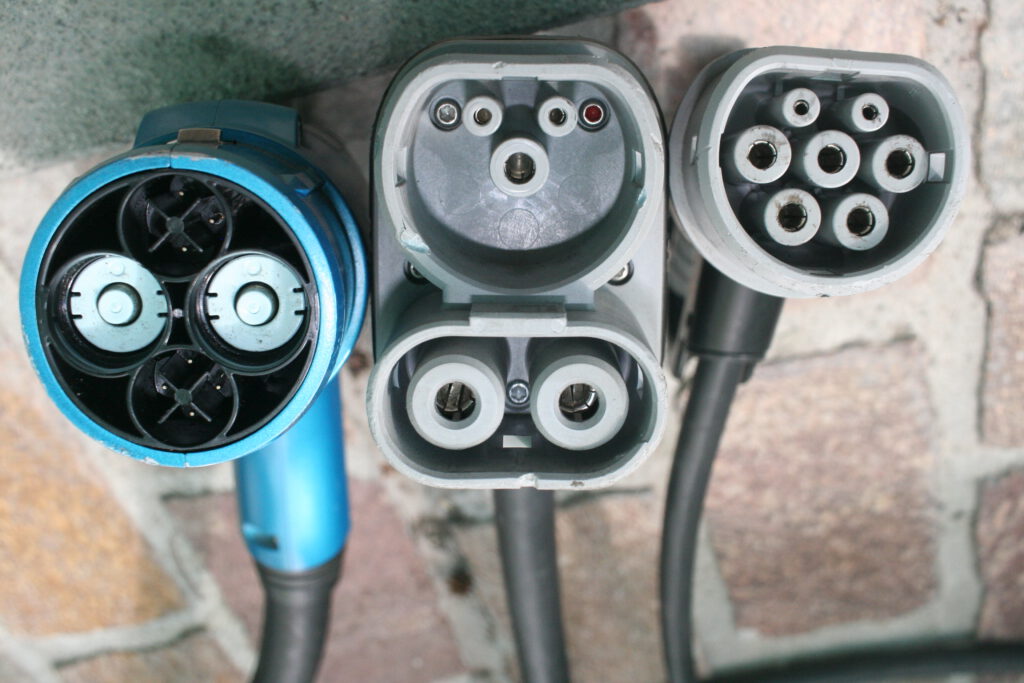
- AC Chargers (Slow/Normal): Affordable, 6–8 hours for full charge.
- DC Fast Chargers: 50–150 kW, charges in 30–90 minutes.
- Ultra-Fast Chargers: 350 kW, future-ready for high-end EVs.
- Wireless Charging: Emerging technology for premium EV markets.
Technical Standards & Inter-operability
- Smart meters for accurate billing.
- Load management to avoid grid stress.
- Inter-operability: One charging card/app should work across multiple stations (common in EU, growing in India).
Cost & Investment Requirements
Approximate Costs
- India: ₹1-2 lakh (AC) to ₹50-60 lakh (DC fast charging).
- U.S.
- Level 2 chargers: $2,000-$5,000
- Level 3 chargers: $40,000 to over $100,000 for public fast chargers.
- Europe: €40,000–€100,000 depending on setup.
Business Models
- Pay-per-use charging.
- Subscription services.
- Partnerships with malls, petrol pumps, or fleet operators.
Approvals & Licensing
- India: DISCOM approvals, safety certifications, local business permits.
- Global: Building permits, environmental clearances, utility agreements.
- Public vs. captive (private fleet-only) stations require different permissions.
Future of EV Charging Station Requirements
- India: Goal of charging stations every 25 km on highways.
- Global: AI-powered smart grids, Vehicle-to-Grid (V2G) tech, and renewable-powered hubs.
- Wireless charging & battery swapping are becoming more popular.
Conclusion
Building EV infrastructure requires planning, investment, and compliance with safety and government standards.
To summarize:
- Electric car charging station requirements in India focus on Bharat chargers, CCS2, subsidies, and DISCOM approvals.
- Global requirements vary but emphasize universal standards, fast charging, and renewable integration.
The future is bright since EV charging stations, whether in India or worldwide, present a huge development opportunity for companies and a revolution in convenience for EV owners.
FAQ – Electric Car Charging Station Requirements
What are the basic electric car charging station requirements?
The basic electric car charging station requirements include suitable land or space, a reliable power supply, proper safety measures like cabling and fire protection, and compatible EV chargers such as AC or DC fast chargers.
What are the EV charging station requirements in India?
In India, EV charging station requirements include following Bharat AC001 and DC001 charger standards, CCS2 and Type 2 connectors, DISCOM approvals for electricity supply, safety certifications, and subsidies under the FAME II policy.
How much does it cost to set up a charging station in India?
The cost of setting up a charging station in India ranges from ₹1.5–2 lakh for a basic AC charger to ₹15–40 lakh for fast DC chargers, depending on land, equipment, and power requirements.
What are the global EV charging standards?
Globally, EV charging standards vary: CCS in the U.S. and Europe, GB/T in China, CHAdeMO in Japan, and Type 2 AC connectors widely adopted across Europe and Asia.
What is the future of EV charging stations?
The future of EV charging stations includes ultra-fast chargers, wireless charging technology, renewable-powered hubs, and Vehicle-to-Grid (V2G) systems that allow EVs to supply power back to the grid.